



Phone:
+86-15978414719
Publish Time: 2026-03-18 Origin:https://www.hmaluminumsupply.com
Potential new users of 1050 H14 aluminium often ask the same practical questions on Google and Q and A threads: what H14 really means, how it behaves in fabrication, and how to avoid surface and flatness surprises after cutting.
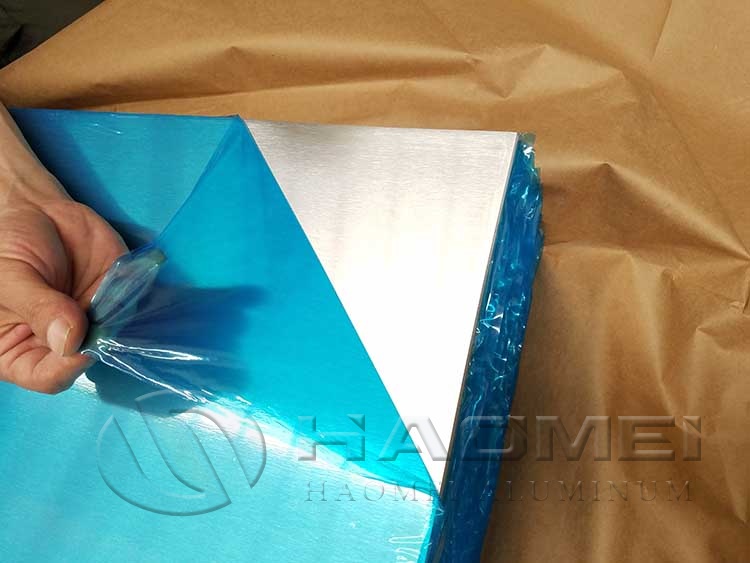
H14 is a strain hardened temper. In plain terms, 1050 aluminium in H14 has been cold worked to become stiffer and stronger than fully soft material, but it is still far from a high strength alloy.
What people notice in real fabrication is the trade off:
Pros: better dent resistance and handling strength than O temper, more stable for panels, less "gummy" when machining than fully soft.
Cons: it is less formable than O, so tight radii bends can show surface stretch marks or small edge cracking if the tooling is too sharp.
A practical rule: if you need deep drawing or very tight radius bending, ask for O temper. If you need a clean general purpose panel that can still be formed with reasonable radii, H14 is commonly chosen.
| Property area | 1050 O (soft) | 1050 H14 (half hard) |
|---|---|---|
| Formability | Highest | Medium |
| Dent resistance | Low | Better |
| Dimensional stability | Medium | Better |
| Typical use feel | Very flexible | Noticeably stiffer |
Yes, 1050 is generally very weldable because it is a high purity 1000 series alloy. The typical questions are really about appearance and conductivity after welding.
Key points that matter on the shop floor:
Welding process: TIG and MIG are both common.
Heat affected zone: the area near the weld will soften compared with H14, because welding heat reduces the cold work. This can cause slight local distortion or a softer strip along the seam.
Filler selection: many fabricators use 1100 or 4043 depending on needs. If matching electrical conductivity and corrosion behavior is the priority, a high purity filler family is often preferred.
If the part is cosmetic, do a small trial first. 1050 can show color variation after welding and cleaning, especially if the surface is bright rolled or will be anodized.
This is one of the most common recent questions, and it usually comes down to released internal stress and thermal input.
What is happening:
H14 has stored stress from cold rolling.
When you cut, especially with laser or aggressive punching, you change the stress balance. The piece can "move" into a new shape.
Thin gauges are more sensitive, and wide flat parts show it more than small blanks.
How to reduce warping in practice:
Choose stress reduced material when available or request improved flatness control.
Optimize nesting so long thin strips are not left unsupported.
Use lower heat input cutting parameters when possible.
Allow for leveling after cutting for critical flatness parts.
If surface protection is important during cutting and handling, consider a PE film option such as Factory Customized Aluminium Aluminum Plain Flat Plate with PE Film One Side, which helps reduce scratches that can be mistaken for rolling lines.
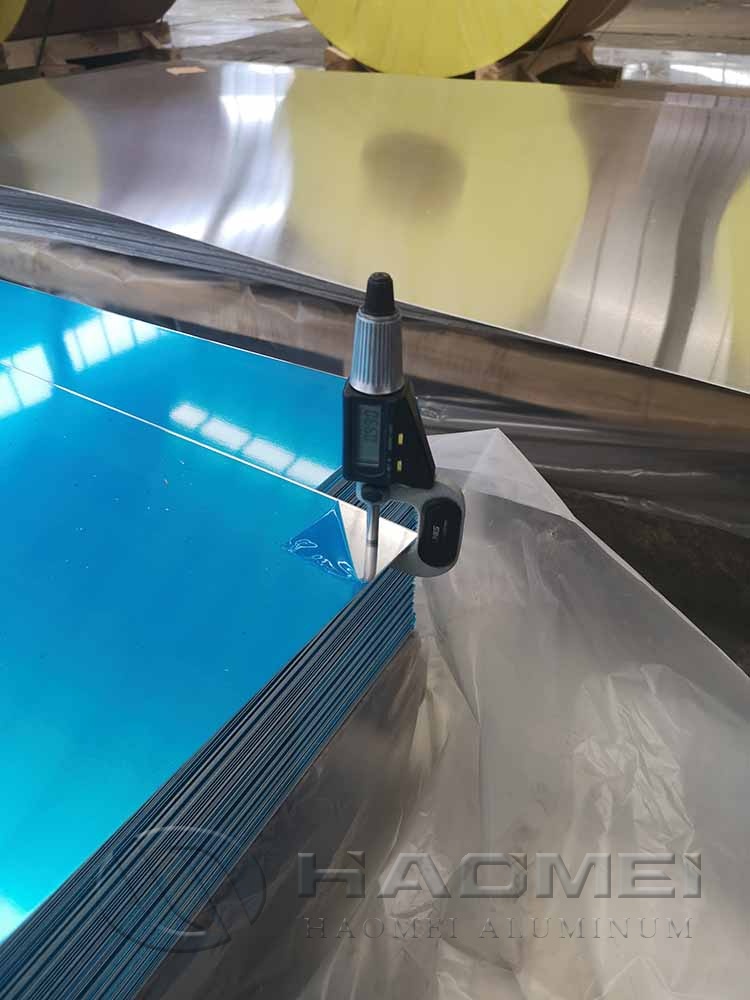
People often expect "perfectly flat" and "exact thickness," but aluminium rolling is controlled within standards and mill capability ranges, not to zero deviation.
What to ask for when requesting a quote:
Thickness range and tolerance standard: specify a standard (EN, ASTM) if your project requires it.
Flatness requirement: define how you will measure it (for example, max gap under a straightedge over a given length).
Surface condition: mill finish, bright finish, or anodizing quality expectations.
Realistic expectations:
Wider and thinner sheets typically show more waviness potential.
Tight tolerance and high flatness may require additional processing like stretching, leveling, or selection of tighter control production.
| Item to specify | Example you can state |
|---|---|
| Alloy and temper | 1050 H14 |
| Standard | EN AW-1050A or equivalent |
| Thickness and size | 1.0 mm, 1250 x 2500 mm |
| Flatness | max 3 mm deviation over 2 m |
| Surface | one side film, no oil, no dents |
| Processing | cut to size, deburr |
1050 has good natural corrosion resistance in many environments because aluminium forms a stable oxide layer. The real question is not only corrosion, but also appearance stability.
For outdoor exposure:
In clean rural environments, bare 1050 can perform well.
In coastal or industrial areas, surface staining and pitting risk increases, and visual quality can degrade faster.
If the part is decorative or needs long term color consistency, coating is often chosen.
A common approach is pre painted or PVDF coated material for exterior cladding where appearance and UV resistance matter more than maximum strength. If your project is architectural facing, PVDF Coated Pre Painted Buidling Material Aluminum Sheet for Exterior Construction is a typical specification path.
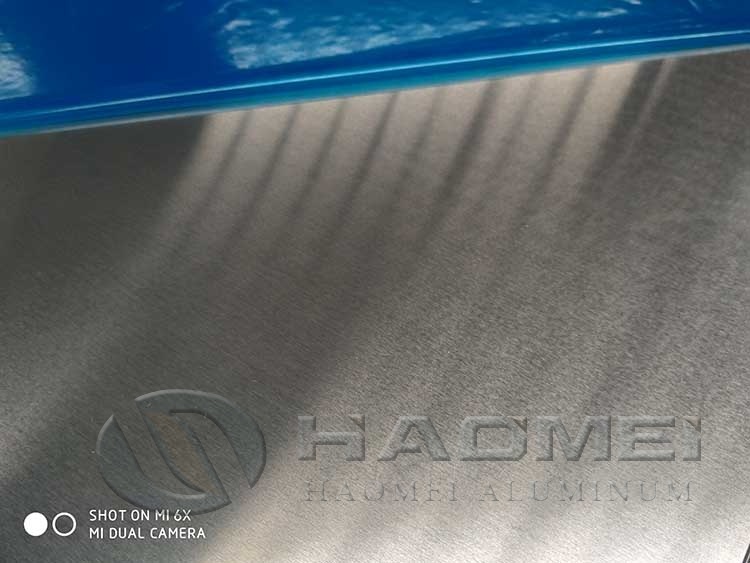
Electrical and thermal conductivity: 1050 is often selected because it performs well here compared with many alloys.
Strength limits: if the part is load bearing, you may need a 5000 or 6000 series alloy rather than 1050.
Finishing: for anodizing, high purity alloys can anodize well, but surface prep and rolling marks control are critical for a uniform look.
| Use case | Why 1050 H14 is chosen | Typical caution |
|---|---|---|
| General panels, covers | balance of stiffness and workability | define flatness and film |
| Reflectors, light related parts | good formability and finish potential | surface defects show easily |
| Heat transfer parts | good thermal conductivity | design around strength limits |
| Signage backers | corrosion resistance, easy fabrication | coating needed for color stability |
With the development of dozens of years, we, Haomei Aluminum has solid base to provide clean aluminum material for the high-end applications including lithium-ion battery, lightweight automobile body, 3c products, aluminum brazing and other special uses.