



Phone:
+86-15978414719
Publish Time: 2026-05-12 Origin:https://www.hmaluminumsupply.com
7075 Aluminum Sheet is a 7xxx Al-Zn-Mg-Cu alloy used when a part must carry high load without adding unnecessary mass. For purchasing and engineering teams, the main risk is not the alloy name. It is receiving the wrong temper, tolerance, surface condition, or certificate for the application.
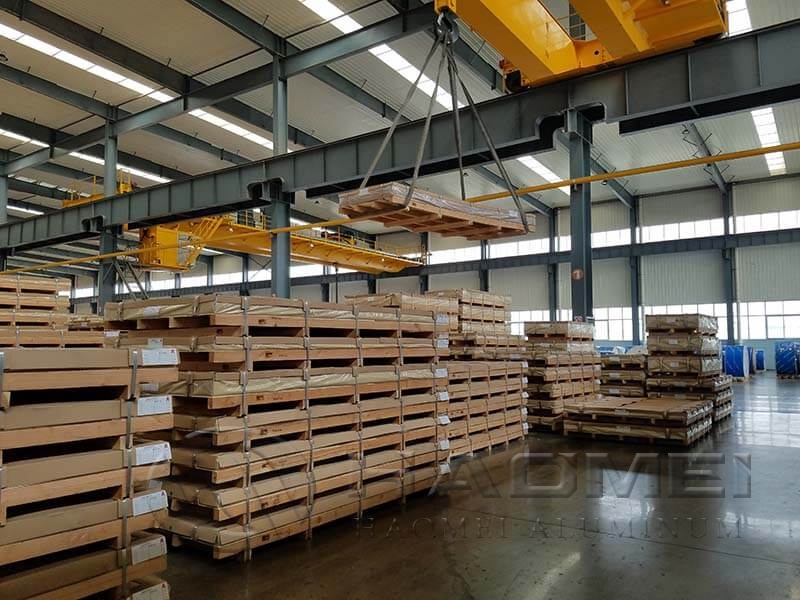
Featured concern: verified T6 or T651 strength-to-weight. Published reference values for 7075-T6 commonly show ultimate tensile strength near 570 MPa and yield strength near 500 MPa, depending on product form and thickness. By comparison, 6061-T6 is commonly around 310 MPa ultimate tensile strength and 276 MPa yield strength. Final acceptance should always follow the mill test certificate and the ordered standard.
Alloy 7075 is selected for aerospace fittings, UAV frames, precision jigs, molds, robotics, defense components, high-end bicycle parts, and structural machined plates. The advantage is high strength at about one-third the density of steel. The tradeoff is lower corrosion resistance than many 5xxx and 6xxx grades, limited weldability for structural use, and higher sensitivity to stress corrosion cracking in aggressive environments.
| Purchasing concern | What can go wrong | Practical control |
|---|---|---|
| Wrong temper | Strength or machinability fails after cutting | State T6, T651, T73, or T7351 clearly on the purchase order |
| Residual stress | Large machined parts move after roughing | Choose T651 or T7351 for stretched stress-relieved plate |
| Corrosion exposure | White corrosion, pitting, or premature cracking | Consider clad material, anodizing, conversion coating, or T73-type tempers |
| Welding expectation | Structural welds lose strength and reliability | Use mechanical fastening, riveting, or redesign with a weldable alloy |
| Unverified certificate | Rejection by aerospace or precision machining customers | Require chemical, mechanical, batch traceability, and heat treatment records |
For chloride-rich marine structures, alloy 7075 is rarely the first choice. If corrosion resistance outranks peak strength, teams often compare it with 5083 H321 H111 H32 H22 Marine High Corrosion Resistant Aluminum Plate during material selection.
The chemical composition of 7075 is defined in recognized aluminum alloy registrations and standards such as ASTM B209/B209M for aluminum and aluminum-alloy plate and flat rolled products. Composition limits must be checked against the current standard edition and the mill certificate.
| Element | Typical specified range for alloy 7075 |
|---|---|
| Zinc | 5.1-6.1% |
| Magnesium | 2.1-2.9% |
| Copper | 1.2-2.0% |
| Chromium | 0.18-0.28% |
| Silicon | Max 0.40% |
| Iron | Max 0.50% |
| Manganese | Max 0.30% |
| Titanium | Max 0.20% |
| Aluminum | Balance |
Temper selection drives performance. T6 offers very high strength. T651 is stretched after solution heat treatment and aging, which helps reduce internal stress for machining. T73 and T7351 sacrifice some strength to improve stress corrosion cracking resistance, which matters in humid, salt, or aircraft service environments.
| Temper | Main purpose | Typical use case |
|---|---|---|
| O | Soft annealed condition | Forming trials, non-structural processing |
| T6 | High strength | Brackets, fixtures, stressed components |
| T651 | High strength plus reduced machining movement | CNC plates, tooling, precision components |
| T73 | Better stress corrosion resistance | Aerospace parts exposed to severe environments |
| T7351 | T73 performance with stress relief | Thick machined parts requiring dimensional stability |
For electronic fixtures and panels where flatness is the controlling requirement, compare machining needs with Ultra Flat Aluminum Sheet for 3C Electronic Products before approving the final grade.
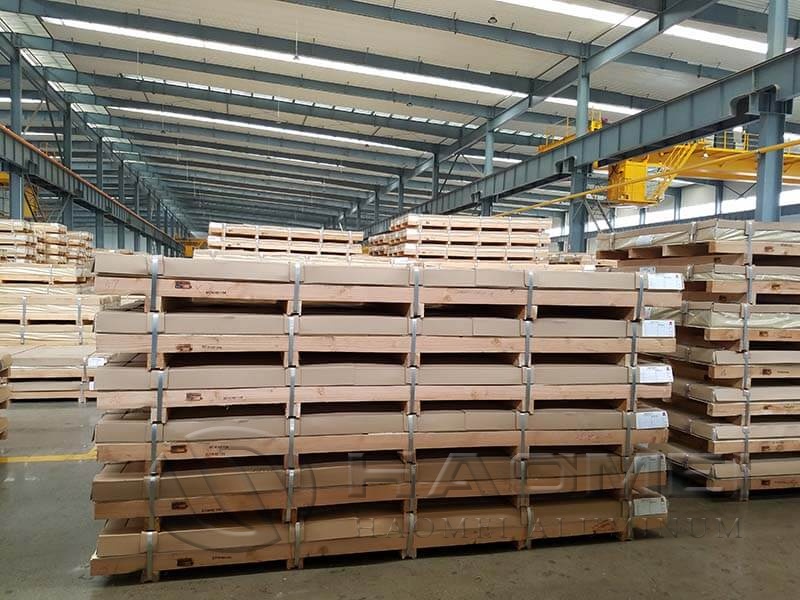
Use a written checklist before confirming any commercial order. It reduces disputes over thickness, tolerances, surface, packaging, and documentation.
| Step | What to specify | Why it matters |
|---|---|---|
| 1 | Standard: ASTM B209/B209M, AMS-QQ-A-250/12, EN 485, or customer drawing | Aligns chemistry, mechanical testing, tolerances, and acceptance rules |
| 2 | Alloy and temper: 7075-T6, 7075-T651, 7075-T73, or 7075-T7351 | Prevents substitution with a visually similar grade |
| 3 | Thickness, width, length, and tolerance class | Controls yield rate and machining allowance |
| 4 | Flatness and squareness requirements | Reduces CNC setup time and post-machining distortion |
| 5 | Surface condition: mill finish, PVC or PE film, anodizing suitability | Prevents scratches, stains, and cosmetic rejection |
| 6 | Certificate: EN 10204 3.1 or equivalent mill test certificate | Supports traceability and customer audits |
| 7 | Optional inspection: ultrasonic testing for thick plate | Helps detect internal discontinuities in critical parts |
| 8 | Packaging: moisture barrier, desiccant, edge protection, export pallets | Reduces transit damage and oxidation risk |
Pricing for 7075 flat material is normally affected by the LME aluminum base, zinc and magnesium cost movement, conversion charge, thickness, temper, order size, inspection level, and cutting requirement. A low quote may exclude stress relief, certification, protective film, or export-grade packaging, so compare offers line by line rather than by unit price alone.
A practical inquiry format is:
Before shipment, inspect markings, certificate values, temper, dimensions, surface scratches, water stains, and pallet condition. For precision machining, leave allowance for stress release, rough machine both sides when possible, and use staged machining if the component has thin walls or deep pockets.
With the development of dozens of years, we, Haomei Aluminum has solid base to provide clean aluminum material for the high-end applications including lithium-ion battery, lightweight automobile body, 3c products, aluminum brazing and other special uses.