



Phone:
+86-15978414719
Publish Time: 2026-05-20 Origin:https://www.hmaluminumsupply.com
A polished 4 ft x 8 ft aluminum panel is often selected for signage, lighting reflectors, elevator interiors, display fixtures, appliance panels, trailers, and decorative wall systems. The main concern is not only brightness. It is repeatable surface quality after cutting, bending, transport, and installation.
This article focuses on one practical feature: surface protection and scratch control. A highly reflective panel can lose value quickly if the finish is scuffed, stained, or inconsistent across sheets.
A standard 4x8 size equals 48 in x 96 in, or about 1219 mm x 2438 mm. In international trade, both inch and metric dimensions should appear on the purchase specification to avoid trimming disputes.
Polished aluminum is not a single alloy. It is a finish applied to an aluminum substrate. The substrate controls formability, strength, corrosion resistance, and cost.
Common choices include:
| Alloy | Typical temper | Main use | Practical note |
|---|---|---|---|
| 1050 / 1060 | H14, H18 | Reflectors, decorative panels | High aluminum purity supports bright reflectivity and easy forming. |
| 1100 | H14 | Interior trim, nameplates | Excellent workability and corrosion resistance. |
| 3003 | H14, H16 | Wall panels, cabinets, vehicle interiors | Better strength than 1xxx series, moderate reflectivity. |
| 5052 | H32 | Marine-adjacent trim, transport panels | Better corrosion resistance and strength, less mirror-like after polishing. |
For most mirror and decorative uses, 1050, 1060, and 1100 are preferred. For parts needing higher dent resistance, 3003 or 5052 may be better, but the reflectivity requirement must be confirmed by sample testing.
Recommended internal reference terms: polished aluminum sheet, 4x8 aluminum sheet, mirror finish aluminum, aluminum mirror sheet.
The material standard should be stated clearly. For North American supply, ASTM B209/B209M covers aluminum and aluminum-alloy sheet and plate. For European supply, EN 485 series covers aluminum and aluminum alloy sheet, strip, and plate, including mechanical properties and dimensional tolerances.
Do not rely on the word polished alone. Add measurable inspection items.
| Item to verify | Suggested method or reference | Why it matters |
|---|---|---|
| Chemical composition | ASTM B209/B209M or EN 573 | Confirms alloy identity. |
| Mechanical properties | ASTM B209/B209M or EN 485-2 | Confirms temper and forming behavior. |
| Thickness tolerance | ASTM B209/B209M or EN 485-4 | Prevents assembly gaps and weight variation. |
| Flatness | ASTM B209/B209M tolerance tables or agreed project tolerance | Reduces oil canning and reflection distortion. |
| Surface gloss | ASTM D523 gloss measurement, often at 60 degrees or 20 degrees | Helps compare brightness by instrument, not opinion. |
| Image clarity | ASTM E430 can evaluate distinctness-of-image gloss | Useful for mirror-like architectural surfaces. |
| Protective film adhesion | ASTM D3359 is commonly used for coating adhesion evaluation | Helps check whether film or coating peels cleanly. |
| Roughness | ISO 4287 / ISO 4288 where required | Supports consistent polish quality. |
For architectural interiors, fire and building code requirements may apply to the final composite or installed system. For example, ASTM E84 is often used in North America to evaluate surface burning characteristics of building materials. A bare aluminum sheet is non-combustible, but adhesive backing, polymer film, paint, or composite layers can change the system rating.
Use this checklist before placing an order.
| Thickness | Typical application | Caution |
|---|---|---|
| 0.3-0.5 mm | Labels, light decorative panels, lampshades | Easy to dent; needs rigid backing. |
| 0.6-1.0 mm | Wall cladding, display panels, appliance trim | Common balance of weight and stiffness. |
| 1.2-2.0 mm | Elevator interiors, cabinet doors, signage | Better flatness; higher cutting and forming load. |
| 2.5-3.0 mm | Structural decorative panels, transport use | Confirm bend radius and surface crack risk. |
For 4x8 polished panels, 0.8 mm, 1.0 mm, 1.2 mm, and 1.5 mm are frequent commercial choices. If the panel will be bonded to plywood, honeycomb, ACP core, or steel frame, specify the adhesive side treatment separately.
| Finish type | Appearance | Best suited for | Procurement risk |
|---|---|---|---|
| Mechanical polished | Bright, directional polish lines possible | Interior decoration, trim | Batch-to-batch line pattern variation. |
| Mirror polished | High reflectivity, clearer image | Lighting, displays, premium interiors | Scratches are highly visible. |
| Brushed plus polished | Satin reflective | Elevator, wall panels | Direction must be marked before cutting. |
| Anodized mirror | Protective oxide layer with bright surface | Higher wear resistance | Color tone and gloss depend on anodizing control. |
If exterior use is expected, confirm corrosion environment. Coastal, industrial, or alkaline cleaning exposure can stain polished aluminum. Anodizing or clear coating may be needed, but coating can reduce optical reflectivity.
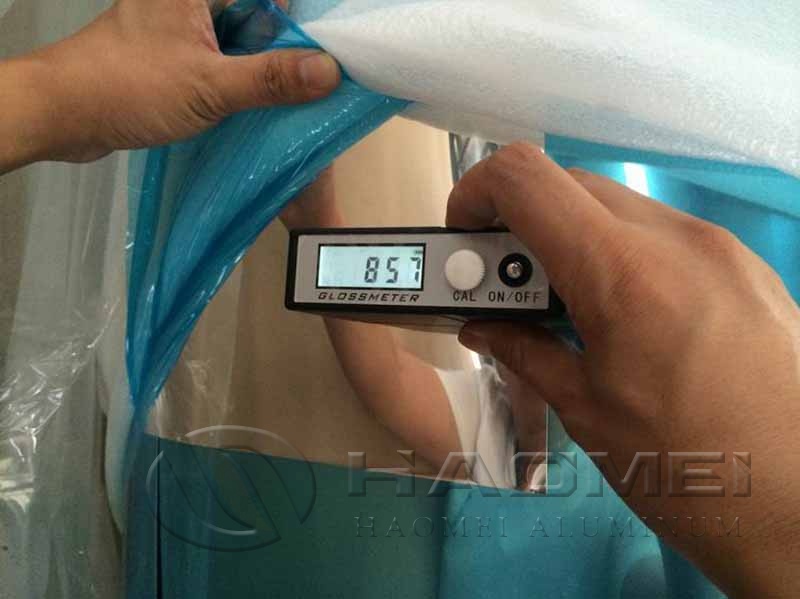
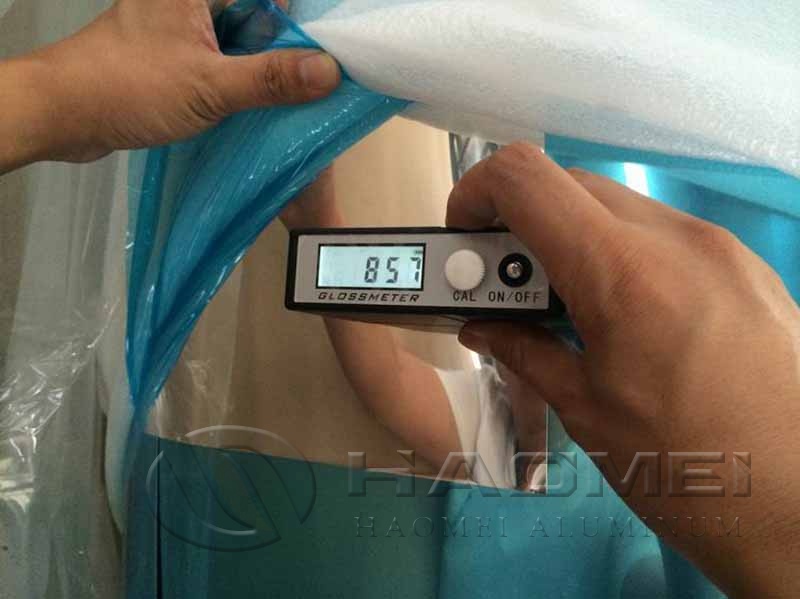
For polished panels, protective film is not a minor packaging detail. It is part of the surface quality plan.
Specify:
Film type: PE film is common for temporary protection.
Film color: white, blue, clear, or black-white film for UV resistance.
Film thickness: commonly specified in microns by the supplier.
Adhesion level: low, medium, or high tack based on cutting and forming process.
Removal window: state maximum storage time before peeling.
UV exposure: confirm whether the film is suitable for outdoor storage.
Peeling condition: film should remove without glue residue under agreed conditions.
A practical receiving test is to peel a 100 mm x 100 mm area from a retained sample after storage simulation. Check for glue transfer, ghost marks, and gloss change.
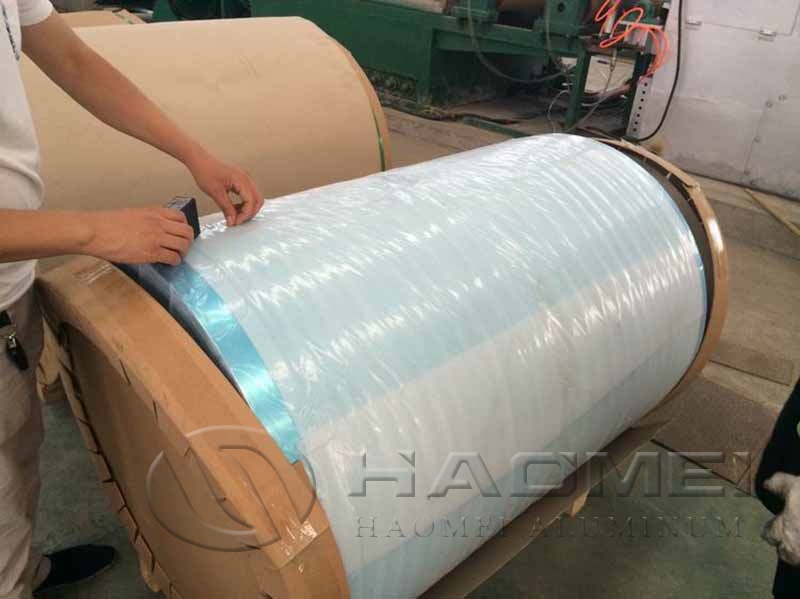
Polished 4x8 panels should be packed to prevent sliding abrasion. Suitable export packing often includes interleaving paper or film, moisture barrier, corner protection, wood pallet, steel or PET strapping, and clear pallet labels.
Inspection before unloading should include:
Pallet deformation or broken boards.
Water stains on outer wrapping.
Edge crush, corner impact, or strap marks.
Sheet count by package label and packing list.
Random surface check under uniform lighting.
Direction mark confirmation for brushed or directional polish.
For container shipping, request photos before dispatch: top view, side view, pallet label, moisture protection, and container loading condition. These images help resolve claims if transit damage occurs.
Polished aluminum sheet pricing usually includes three parts: base aluminum value, conversion cost, and surface/packing premium. The base value is commonly referenced to public aluminum markets such as the London Metal Exchange or CME aluminum contracts, while regional premiums and mill processing charges vary by location and order specification.
When comparing offers, do not compare only unit price. Compare the same alloy, temper, thickness, size tolerance, reflectivity requirement, film type, packing method, and inspection document package.
Use this comparison format:
| Supplier offer item | Offer A | Offer B | Required decision |
|---|---|---|---|
| Alloy and temper | 1060 H18 | 3003 H14 | Match to forming and gloss target. |
| Thickness tolerance | Stated | Not stated | Require standard reference. |
| Gloss value | Included | Not included | Request measured data. |
| Film specification | PE, medium tack | General film | Define adhesion and removal time. |
| Packing | Export pallet | Simple pallet | Choose based on shipping distance. |
| Test documents | Mill certificate, surface photos | Mill certificate only | Add gloss and visual inspection record. |
For repeat projects, approve a master sample and keep it under controlled storage. The sample should identify alloy, temper, thickness, surface code, film type, and production batch. Future deliveries can then be checked against a physical reference rather than subjective wording.
Confirm documents against the order: alloy, temper, dimensions, quantity, standards, and certificate numbers.
Inspect packaging before opening, and photograph any damage.
Check thickness with calibrated micrometers at multiple points.
Measure length and width after sheets reach room temperature.
Inspect the surface under consistent lighting at an agreed viewing distance.
Peel a small film area at the corner to check residue and surface marks.
Record gloss or image clarity if the project requires measured reflectivity.
Quarantine questionable panels before cutting, because fabrication can weaken a claim.
A polished aluminum sheet in 4x8 format performs well when the surface requirement is translated into measurable terms. The safest specification combines alloy, temper, thickness tolerance, reflectivity test, film behavior, and packing method in one document before production starts.
With the development of dozens of years, we, Haomei Aluminum has solid base to provide clean aluminum material for the high-end applications including lithium-ion battery, lightweight automobile body, 3c products, aluminum brazing and other special uses.