



Phone:
+86-15978414719
Publish Time: 2026-08-11 Origin:https://www.hmaluminumsupply.com
1100 aluminum sheet is selected primarily when formability matters more than structural strength. Its high aluminum content, soft temper options, and reliable corrosion resistance make it suitable for deep-drawn parts, chemical equipment liners, reflector components, signage, cookware blanks, and general fabrication.
For purchasers, the practical risk is not choosing the wrong nominal alloy. It is receiving material with inconsistent temper, poor surface condition, unsuitable flatness, or inadequate protection for a visible finished part. This article sets out measurable specifications and inspection steps that reduce those risks.
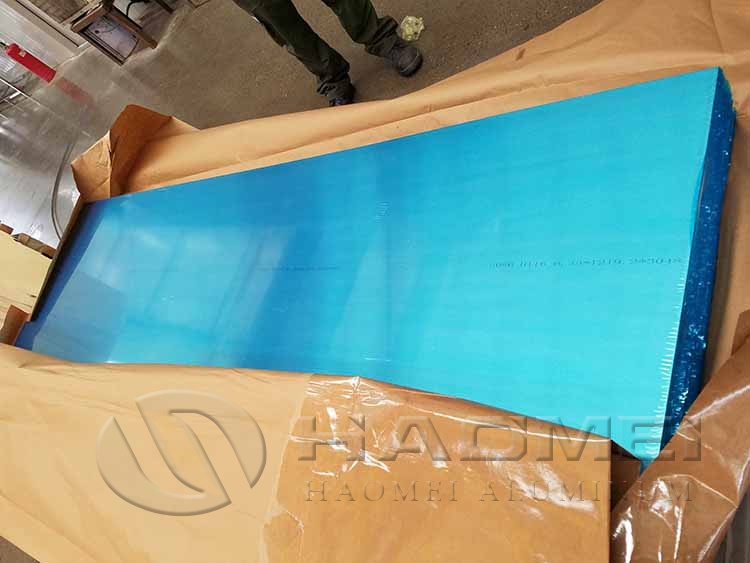
AA 1100 is commercially pure aluminum. ASTM B209 lists it among aluminum-alloy sheet and plate products, while EN 573-3 identifies EN AW-1100 as Al99.0Cu. The designation indicates a minimum aluminum content of 99.00%; small additions, especially copper, are permitted within controlled limits.
Because it is not heat-treatable, this alloy develops strength mainly through cold working. For parts requiring severe drawing, spinning, folding, or roll forming, select a soft condition rather than trying to force a harder temper through tight radii.
| Property or requirement | Practical value for 1100 material | Specification action |
|---|---|---|
| Aluminum content | Minimum 99.00% for AA 1100 | Request a mill test certificate with chemistry |
| Density | Approximately 2.71 g/cm³ | Use for shipping-weight and blank-weight calculations |
| Heat treatment | Non-heat-treatable | Specify temper, not a post-heat-treatment strength target |
| Corrosion resistance | Strong in atmospheric environments | Confirm suitability where acids, alkalis, or chlorides are present |
| Electrical conductivity | About 59% IACS is commonly published for 1100 | Confirm required conductivity test method for electrical uses |
The most common tempers are O, H14, H16, H18, and H24. O temper offers maximum ductility. H14 is often a balanced choice where moderate handling stiffness is needed without sacrificing routine bending. H18 has a harder surface but notably lower forming latitude.
| Fabrication operation | Preferred condition | Reason |
|---|---|---|
| Deep drawing, spinning, severe embossing | O | Lowest work-hardening condition and highest ductility |
| General bending and folded panels | H14 or H24 | Better shape retention with workable bend performance |
| Flat signs and non-formed covers | H14 to H18 | Higher dent resistance and handling stiffness |
| Reflective or decorative panels | O or H14, surface controlled | Formability must be paired with a defined finish standard |
Do not use a generic phrase such as "soft aluminum." State the temper, thickness tolerance, width tolerance, surface finish, and applicable standard on the purchase order. ASTM B209 is commonly used in North America for rolled aluminum sheet and plate. EN 485-2 is relevant when mechanical-property requirements are specified under European practice.
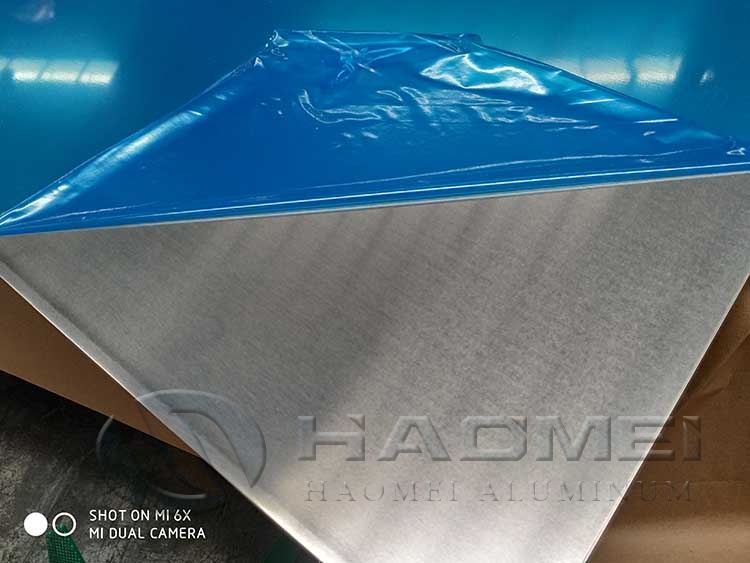
Surface quality is often the costliest issue in high-volume fabrication. A minor scratch, oil stain, roll mark, or trapped particle may be irrelevant for an internal liner but unacceptable after anodizing, polishing, painting, or laminating.
Use this specification checklist before requesting quotations:
For panels that will remain visible after fabrication, protected-face material can reduce handling damage between cutting and installation. A specified Factory Customized Aluminium Aluminum Plain Flat Plate with PE Film One Side is relevant when one presentation face needs controlled protection during transport and processing.
Thickness should be checked at multiple points across the width, not only at the edge. Use a calibrated micrometer with adequate resolution for the ordered gauge. For incoming inspections, compare measured values with the ordered tolerance rather than treating nominal thickness as the acceptance limit.
| Incoming inspection point | Method | Acceptance focus |
|---|---|---|
| Alloy and temper | Mill test certificate review | Must match purchase order exactly |
| Thickness | Calibrated micrometer across width | Within ordered tolerance |
| Surface | Oblique-light visual inspection | No unacceptable dents, scratches, stains, or roll marks |
| Flatness | Flat table or defined flatness method | Suitable for blanking, printing, or panel assembly |
| Film adhesion, if used | Peel trial after storage simulation | Removes cleanly without residue or staining |
| Packaging | Inspect edge guards and moisture barrier | No transit abrasion, water ingress, or coil telescoping |
Thin-gauge requirements need additional care. Material can wrinkle, stretch, or suffer edge damage if packaging and tension are not controlled. For lightweight converter or stamped applications, 0.12mm Aluminum Rolled Metal Aluminum Sheet illustrates the type of product where thickness control and handling discipline become especially important.
Pricing should not be evaluated as a single unexplained number. A comparable quotation separates metal basis, conversion charge, dimensional extras, surface protection, packaging, certification, freight, and taxes. This makes it possible to identify whether a low offer omits film, tighter tolerance, export packaging, or documentation.
A practical price-comparison formula is:
Material cost = metal reference component + regional premium + rolling conversion + finishing and packaging + logistics + applicable duties and taxes
For aluminum, metal-reference mechanisms may use an exchange price such as the London Metal Exchange aluminum price, but contract terms must state the reference date, averaging period, currency, and premium basis. Do not compare offers using different reference dates as if they were equivalent.
Carbon reporting has also become a commercial concern for shipments entering the European Union. The EU Carbon Border Adjustment Mechanism, or CBAM, moved from its transitional reporting phase to its definitive regime on January 1, 2026. Aluminum is within CBAM scope. Importers and supply chains should verify the current product classification, embedded-emissions data requirements, and reporting responsibilities for the specific customs code.
Request these data points when EU delivery is involved:
1100 material performs best when its soft, highly formable nature is used deliberately. Specify temper around the forming operation, convert surface expectations into inspectable criteria, and make documentation, protection, and cost components part of the same purchase-order requirement.
With the development of dozens of years, we, Haomei Aluminum has solid base to provide clean aluminum material for the high-end applications including lithium-ion battery, lightweight automobile body, 3c products, aluminum brazing and other special uses.