



Phone:
+86-15978414719
Publish Time: 2026-10-21 Origin:https://www.hmaluminumsupply.com
For marine hulls, deck structures, pressure vessels, and transport tanks, the priority concern is not simply strength. It is resistance to intergranular corrosion and exfoliation corrosion after welding and long-term saltwater exposure.
5083 is an Al-Mg-Mn alloy designed for welded structures operating in aggressive environments. Its magnesium content provides high as-welded strength and good seawater resistance, but incorrect temper selection, prolonged heat exposure, or insufficient corrosion verification can create expensive in-service failures.
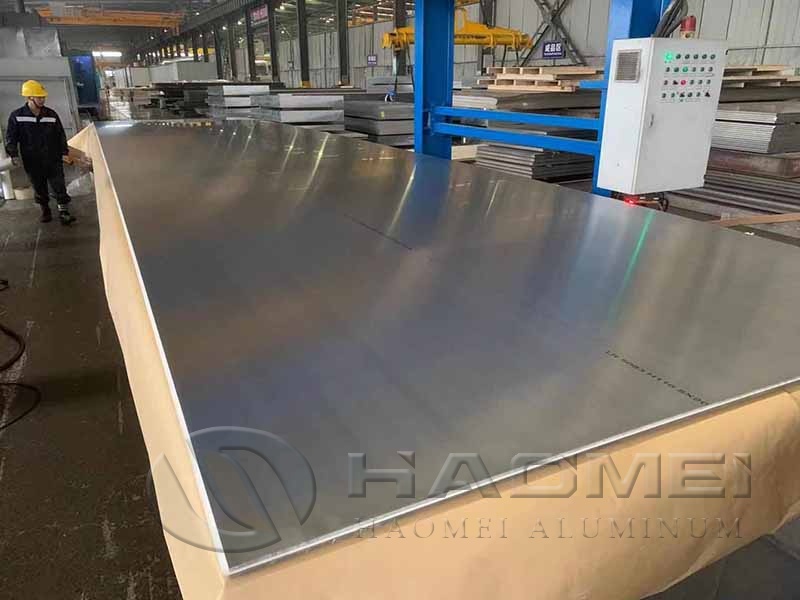
The image shows aluminum plate handling. Alloy identity, temper, and certification must always be verified against the mill test certificate, not visual appearance.
According to EN 573-3, alloy 5083 typically contains 4.0%-4.9% magnesium, 0.4%-1.0% manganese, and 0.05%-0.25% chromium. Its density is approximately 2.66 g/cm³, which supports lightweight structural design compared with steel.
The alloy is non-heat-treatable. Strength is achieved through strain hardening and stabilization rather than precipitation heat treatment. For welded marine structures, H116 and H321 are commonly specified because they are intended for improved resistance to exfoliation corrosion in marine exposure.
| Temper | Typical procurement use | Corrosion control consideration |
|---|---|---|
| H111 | Formed or lightly worked structural components | Good formability; confirm minimum mechanical properties for thickness |
| H116 | Marine plate exposed to seawater | Common choice where exfoliation resistance must be documented |
| H321 | Marine and welded structures requiring stabilized temper | Suitable for specified corrosion-tested marine applications |
| H32 | General structural work | Verify whether the project specification requires marine corrosion testing |
Do not specify a temper by strength alone. A plate may meet tensile requirements yet fail a marine project requirement if it lacks the mandated corrosion-test qualification.
For vessels, offshore fabrications, and coastal infrastructure, specify material to ASTM B928/B928M when applicable. This standard covers high-magnesium marine aluminum alloy plate and includes requirements associated with resistance to exfoliation and intergranular corrosion. ASTM B209/B209M is commonly used for general aluminum plate requirements, while EN 485-2 provides mechanical-property requirements for wrought aluminum products.
Use this release wording where marine exposure is critical:
Alloy: 5083.
Temper: H116 or H321, as required by design.
Product standard: ASTM B928/B928M, or the applicable EN/project standard.
Corrosion testing: Request reports for ASTM G66 exfoliation testing and ASTM G67 nitric acid mass-loss testing where contractually required.
Documentation: Mill test certificate showing heat number, chemical analysis, thickness, mechanical properties, and temper.
For marine-specific supply, 5083 H321 H111 H32 H22 Marine High Corrosion Resistant Aluminum Plate should be matched to the drawing thickness, temper, and corrosion-test clause before production release.
The main technical risk with 5xxx-series plate is sensitization. When Al-Mg alloys spend extended periods at moderately elevated temperatures, beta-phase particles may form along grain boundaries. This can reduce resistance to intergranular and exfoliation corrosion. The risk is especially relevant for equipment near sustained heat sources and for improperly selected material in marine service.
Avoid using 5083 where the component will experience continuous elevated-temperature service without a metallurgical review. For ordinary welding, use qualified procedures under the relevant code, such as AWS D1.2/D1.2M for structural aluminum welding. Filler selection, joint design, heat input, and post-weld cleaning should follow the approved welding procedure specification.
| Fabrication stage | Common failure mode | Required control |
|---|---|---|
| Cutting | Edge damage or contamination | Keep carbon-steel tools and grinding dust segregated |
| Forming | Surface cracking or distortion | Confirm minimum bend radius for the ordered thickness and temper |
| Welding | Porosity, distortion, local corrosion initiation | Use qualified WPS, clean oxide and moisture before welding |
| Surface finishing | Embedded iron contamination | Use dedicated stainless or aluminum-only brushes and abrasives |
| Storage | Water staining and galvanic contact | Store dry, covered, and isolated from steel and copper alloys |
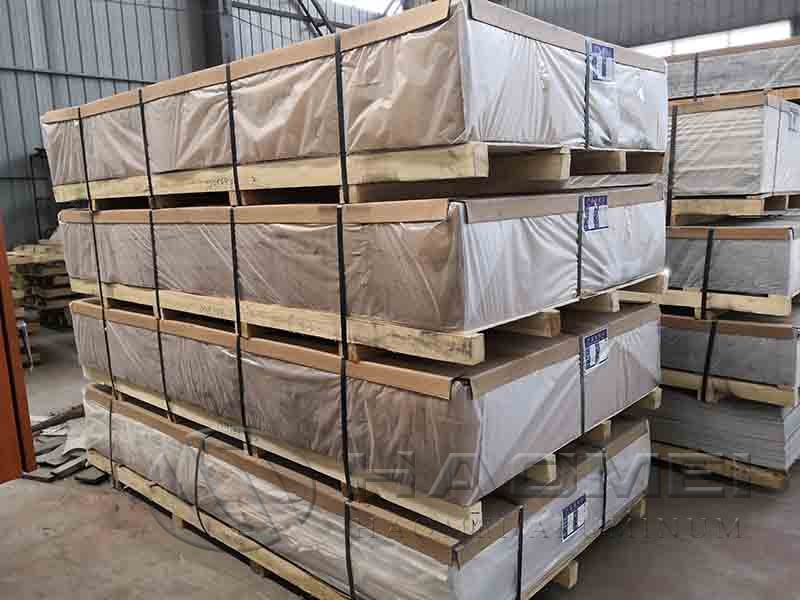
Protected indoor storage reduces staining and handling damage. The pictured stock is 5052; it is not a substitute for specified 5083 material.
If joining to stainless steel, copper alloys, or carbon steel, design electrical isolation and drainage into the assembly. Standing electrolyte and dissimilar-metal contact can accelerate galvanic corrosion even when the aluminum alloy itself has strong seawater resistance.
Flatness, thickness tolerance, and surface condition should be agreed before order placement. ASTM B928/B928M or EN tolerances may not automatically satisfy CNC machining, large-panel welding, or cosmetic surface requirements. Identify the actual need: standard mill flatness, improved flatness, protective film, one-side machining allowance, or ultrasonic inspection.
A transparent plate quotation should separate metal exposure from conversion value. The usual structure is:
Metal basis + regional premium + 5083 conversion + size/temper extras + testing + packing + freight + finance or currency effects.
The metal basis normally tracks a primary aluminum reference such as LME aluminum, while the regional premium reflects local delivery availability. Conversion charges increase with thicker gauges, non-standard widths, H116/H321 processing, corrosion-test documentation, tight flatness, protective film, and smaller lot sizes. Magnesium and energy costs also influence 5083 conversion economics.
Do not compare quotations only by price per tonne. Compare the delivered technical scope.
| Comparison point | Low-cost quotation risk | Purchase control |
|---|---|---|
| Standard | General plate offered for marine duty | State ASTM B928/B928M or exact project standard |
| Temper | H111 substituted for H116/H321 | Put temper substitution under written approval |
| Testing | No heat-specific corrosion evidence | Require applicable test reports with heat traceability |
| Dimensions | Nominal size only | State thickness tolerance, width, length, and flatness requirement |
| Packing | Unprotected bundles | Require moisture barrier, edge protection, and export-worthy skids |
| Traceability | Mixed heats or unidentified pieces | Require piece marking linked to mill certificates |
Supply availability follows rolling-mill capacity, slab allocation, freight conditions, and marine-project demand. Long-lead material is more likely when unusually wide plate, heavy thickness, certified H116/H321 temper, or third-party classification documentation is required. Reserve capacity early for vessel programs and require a rolling schedule, not merely a warehouse availability statement.
For projects needing thin-gauge marine material, Strong Corrosion Resistance Warship Cruise 2.0-4.0mm Aluminum Sheet can be evaluated where the engineering specification permits that dimensional range.
Before dispatch approval, use this receiving checklist:
Verify alloy and temper on each plate marking against the mill test certificate.
Match heat numbers, quantity, dimensions, and net weight to packing documentation.
Check edges, corners, protective layers, water marks, scratches, and transit damage.
Measure thickness at agreed locations using calibrated instruments.
Confirm corrosion-test reports and third-party inspection records where specified.
Quarantine any mixed, unmarked, or moisture-damaged material until traceability is resolved.
With the development of dozens of years, we, Haomei Aluminum has solid base to provide clean aluminum material for the high-end applications including lithium-ion battery, lightweight automobile body, 3c products, aluminum brazing and other special uses.