



Phone:
+86-15978414719
Publish Time: 2026-03-10 Origin:https://www.hmaluminumsupply.com
5005 is an Al-Mg alloy widely selected when the part must be anodized for a clean, uniform architectural look. The practical problem is not strength, but finish risk: coil-to-coil shade variation, roll marks, and surface contamination can cause visible banding after anodizing. This article focuses on how to specify and verify material so anodized appearance is predictable.
Use recognized alloy and product standards so both parties measure the same thing.
Alloy and temper designation: EN 573 / EN 515 (Europe) or AA / ASTM naming in North America. Request "5005" with a specific temper.
Dimensional and tolerance standard:
EN 485 (wrought aluminium sheet and plate: mechanical properties and tolerances), or
ASTM B209 (Aluminum and Aluminum-Alloy Sheet and Plate).
Anodizing reference (for finished parts): ISO 7599 (anodic oxidation of aluminium) is commonly used for thickness and quality definitions.
When you need anodizing consistency, the standard alone is not enough. Add process and surface clauses in the order text: surface class, one-side "A" surface definition, and cleaning/packaging requirements.
For the same alloy, temper mainly changes strength and formability. It does not automatically guarantee anodized uniformity; surface quality controls do.
| Typical temper option | Relative formability | Relative strength | When it is commonly chosen | Appearance risk notes | |---|---:|---:|---| | O (annealed) | Highest | Lowest | Deep forming, tight bends | Softer surface can show handling marks before anodizing | | H14 / H24 | Medium-high | Medium | General fabrication | Balanced; verify surface finish and coil practice | | H34 | Lower | Higher | Flatness-critical panels | Higher work hardening may increase roping sensitivity if surface is not controlled |
If the end product is an anodized architectural panel, specify the exact temper used in qualification so repeat orders match.
Add these to your incoming inspection plan:
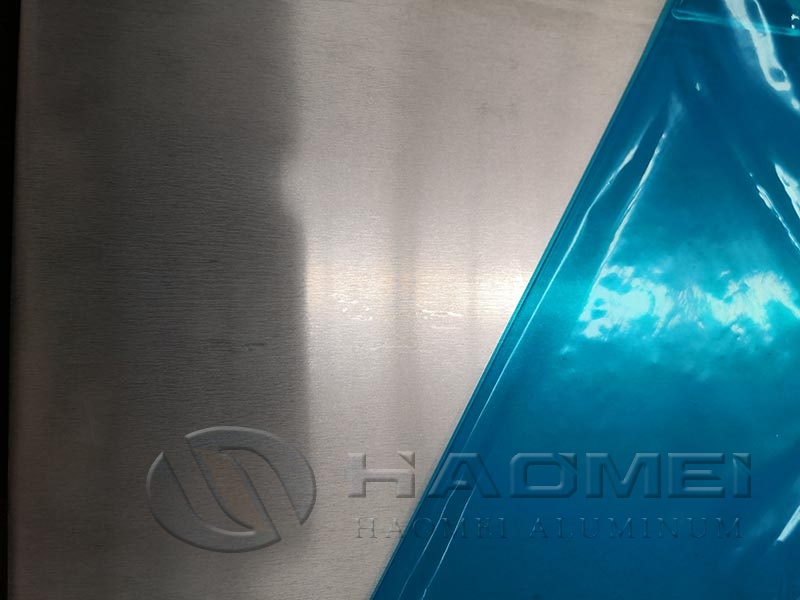
Visual inspection under consistent lighting: check for roll marks, chatter, scratches, edge cracks, and oil streaks. Define an "A side" cosmetic surface.
Surface roughness (if you brush or bright dip): agree Ra target range with the anodizer, then sample per coil.
Cleanliness: request low-residue rolling oil and controlled passivation practice suitable for anodizing. If your process starts with alkaline etch, confirm compatibility.
Practical ordering language:
"One-side protective film, A-side for anodizing." If you need film, consider Factory Customized Aluminium Aluminum Plain Flat Plate with PE Film One Side style requirements (film type, peel strength range, and allowable residue).
5005 is an Al-Mg alloy; anodized shade can shift with chemistry variation and with mixed lots.
Checklist to reduce shade variation:
Restrict to single melt / single cast lot for a project batch when panels will be adjacent.
Request mill test certificate per EN 10204 3.1 (or equivalent) showing composition and mechanical properties.
Ask the mill to state whether recycled content is used; do not ban it by default, but require chemistry within the cited standard.
For high-visibility panels, shape control prevents "oil canning" after fabrication and anodizing.
Incoming checks:
Tensile test per ASTM B209 / EN 485 sampling rules.
Flatness and residual stress: agree a flatness limit and cutting method (shear vs saw). Specify stretcher leveling if needed.
If anodizing appearance is the priority, 5005 is often preferred over higher-Mg 5xxx alloys because higher Mg can increase the risk of anodizing color variation and some surface texture effects. For non-anodized structural use, other alloys may win.
| Requirement | 5005 | 5052 | 3003 |
|---|---|---|---|
| Anodized cosmetic uniformity | Strong choice | Usable but can be less consistent | Often not chosen for high-end anodizing |
| Corrosion resistance | Good | Very good | Good |
| Forming / bending | Good | Very good | Very good |
| Strength demand | Moderate | Higher | Lower |
| Typical reason to switch away | Need higher strength | Need best anodized match | Need lowest cost for non-anodized parts |
If the application is more corrosion-driven (marine exposure), you would usually move to a higher-performance marine plate such as 5083 H321 H111 H32 H22 Marine High Corrosion Resistant Aluminum Plate rather than trying to "over-spec" 5005.
Use this short list to reduce disputes and rework:
Standard: ASTM B209 or EN 485 (state which), alloy 5005, temper (e.g., H14).
Dimensions: thickness, width, length, tolerances, camber limit, and edge condition.
Surface: A-side for anodizing, B-side commercial. Define allowable defects and inspection distance/lighting.
Finish preparation: mill finish or brushed; if brushed, specify direction and Ra target.
Lot control: single melt/lot for color-critical batches; require EN 10204 3.1 certificate.
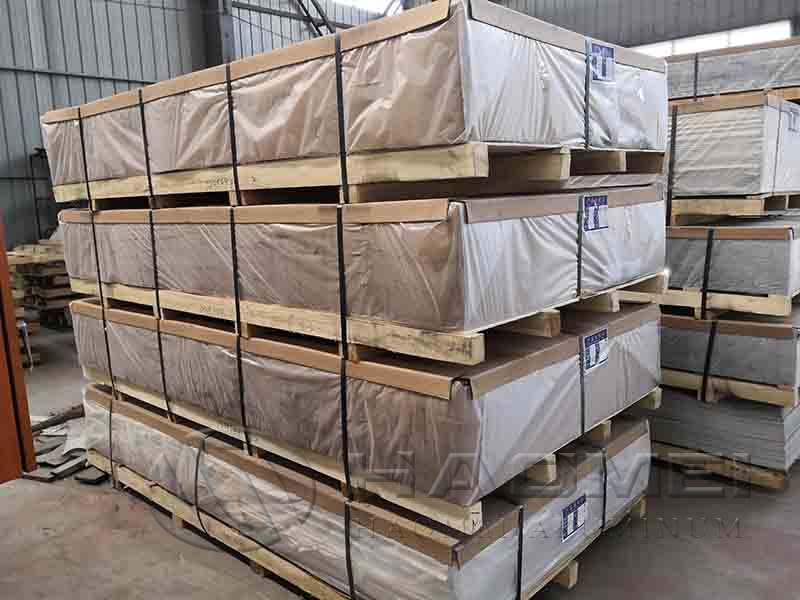
Protection: interleaving paper or one-side PE film (state film specs and residue limits).
Testing: tensile property report; flatness report if critical; agreement on sampling plan.
Aluminium product pricing typically references an exchange-traded primary aluminium price plus conversion (rolling), scrap, energy, and logistics components. To compare offers fairly:
Ask each supplier to separate metal component (indexed to LME or regional equivalent) from conversion and extras (film, brushing, leveling, tight tolerances).
For anodizing-critical orders, expect higher conversion cost due to tighter surface screening and lot control. Confirm that the offer includes extra inspection and packaging.
By focusing on surface definition, lot control, and incoming inspection aligned to ASTM B209 or EN 485, you can materially reduce anodizing shade variation and visible streak defects on 5005 material.
With the development of dozens of years, we, Haomei Aluminum has solid base to provide clean aluminum material for the high-end applications including lithium-ion battery, lightweight automobile body, 3c products, aluminum brazing and other special uses.