



Phone:
+86-15978414719
Publish Time: 2026-06-23 Origin:https://www.hmaluminumsupply.com
Based on recurring English Q&A wording from the recent 3-month search cycle on platforms such as Quora, Google People Also Ask, Reddit-style forums, and engineering communities, 7075 aluminum is being compared most often with 6061, titanium, and steel. The interest is practical: people want high strength, reliable machining, stable flatness, and clearer ordering language before starting prototype or production work.
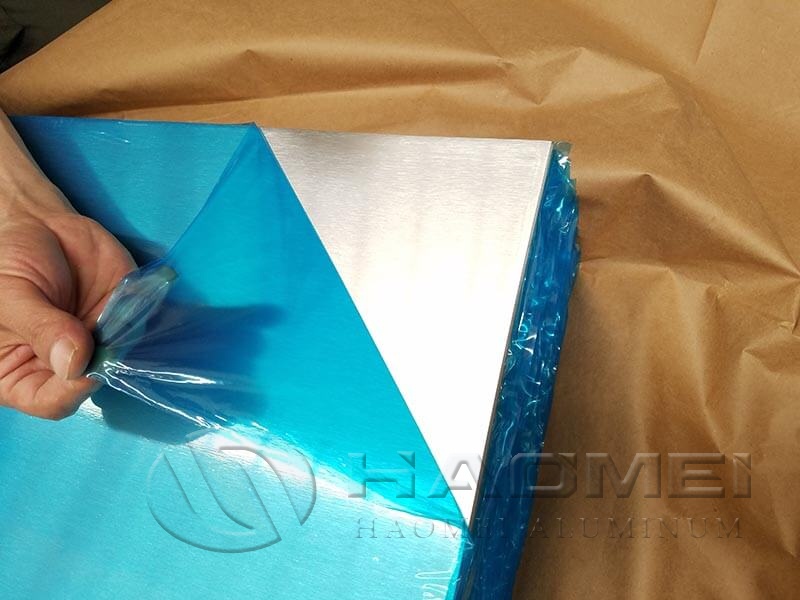
Yes. 7075 aluminum is much stronger than 6061 in common high-strength tempers. 7075-T6 typically reaches tensile strength around 510 to 570 MPa, while 6061-T6 is often around 290 to 330 MPa. This is why 7075 appears in aircraft structures, high-end bicycle parts, molds, robotics arms, drone frames, fixtures, and precision components where weight must stay low but mechanical load is high.
The tradeoff is that 7075 costs more, forms less easily, and has lower corrosion resistance than 6061. If the part is mostly decorative, lightly loaded, or exposed outdoors without strong surface protection, 6061 may be easier to manage. If stiffness-to-weight and high yield strength matter, 7075 is usually the stronger choice.
| Property | 7075-T6 typical range | 6061-T6 typical range | Practical meaning |
|---|---|---|---|
| Tensile strength | 510-570 MPa | 290-330 MPa | 7075 handles higher loads |
| Yield strength | 430-505 MPa | 240-275 MPa | 7075 resists permanent deformation better |
| Machinability | Very good | Good | 7075 produces clean chips with proper tools |
| Corrosion resistance | Moderate | Good | 7075 often needs coating or anodizing |
| Weldability | Poor | Good | 6061 is safer for welded structures |
This is one of the most repeated questions because the temper code changes the real performance of 7075 aluminum. T6 gives very high strength after solution heat treatment and artificial aging. T651 is similar to T6 but stress-relieved by stretching, which improves dimensional stability during CNC machining. T7351 sacrifices some peak strength for better resistance to stress corrosion cracking.
For thick precision parts, 7075-T651 is often preferred because it reduces movement after milling pockets, drilling, or surface finishing. For aircraft or marine-adjacent applications where stress corrosion is a risk, T7351 or T73 may be discussed with the engineer.
| Temper | Main advantage | Common use | Watch point |
|---|---|---|---|
| 7075-T6 | Maximum strength | Drone frames, tooling, racing parts | More sensitive to stress corrosion |
| 7075-T651 | Strength plus stress relief | CNC plates, fixtures, molds | Slightly higher processing cost |
| 7075-T7351 | Better stress corrosion resistance | Aerospace structures, stressed parts | Lower strength than T6/T651 |
For projects involving nonstandard thickness, tight tolerances, or custom surface preparation, Special aluminum materials can help match temper, tolerance, and surface expectations before production begins.
7075 aluminum does not rust like carbon steel because it contains no iron base that forms red rust. However, it can corrode, especially in salty, humid, or acidic environments. Its high zinc and copper content gives excellent strength but reduces natural corrosion resistance compared with 5052, 5083, or 6061.
For outdoor service, bare 7075 is usually not the safest condition. Common protective options include anodizing, hard anodizing, conversion coating, painting, powder coating, or sealing after machining. If the part contacts stainless steel, carbon fiber, or copper alloys, galvanic corrosion should also be considered. Insulating washers, sealants, or coating systems can reduce this risk.
Anodizing 7075 is possible, but the color may look less bright and less uniform than 6061 because of alloying elements. Black hard anodizing is common for mechanical parts, while clear anodizing may show a slightly gray tone.
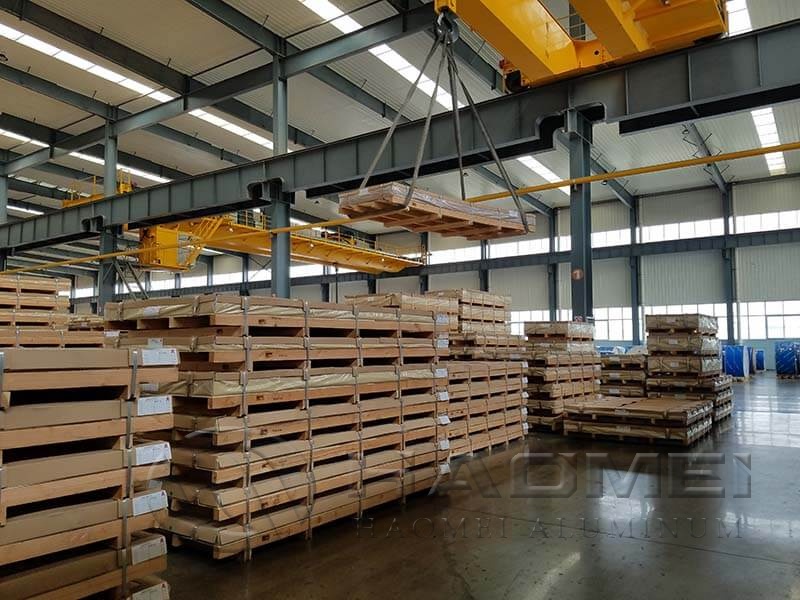
7075 is excellent for CNC machining but poor for conventional welding. The alloy can crack in the heat-affected zone, and welded strength is not dependable for critical structures. If a welded frame is required, 6061, 5052, or 5083 is usually a better direction.
Bending is possible only under controlled conditions and depends heavily on thickness, temper, bend radius, and grain direction. 7075-T6 is not a friendly bending material because it is hard and strong. If forming is required, softer tempers may be considered first, followed by heat treatment if the final strength must be restored.
Machining is where 7075 performs very well. It cuts cleanly, holds fine detail, and supports tight dimensional targets when the correct temper and stress-relieved stock are used. For flat components that require surface protection during handling, Factory Customized Aluminium Aluminum Plain Flat Plate with PE Film One Side is a relevant material style for precision processing discussions.
| Process | Suitability for 7075 | Practical note |
|---|---|---|
| CNC milling | Excellent | Use sharp tools, stable clamping, and suitable coolant |
| Drilling | Very good | Peck drilling helps deep holes and chip control |
| Welding | Poor | Avoid for critical load-bearing parts |
| Bending | Limited | Larger radius and softer temper reduce cracking risk |
| Anodizing | Good | Appearance can be darker or less uniform than 6061 |
People often ask why two quotes for 7075 aluminum look different. The usual reason is incomplete specification. Thickness alone is not enough. A serious RFQ should include alloy, temper, thickness, width, length, tolerance standard, surface condition, packaging request, certificate need, and end use.
For international purchasing, common references include ASTM B209 for rolled aluminum products and AMS specifications for aerospace-grade requirements. If the material will be machined into precision parts, mention flatness, residual stress concern, and whether protective film is needed. If parts will be anodized, request a surface suitable for that finish.
| RFQ item | Example wording | Why it matters |
|---|---|---|
| Alloy and temper | 7075-T651 | Prevents substitution with a weaker temper |
| Size | 10 mm x 1000 mm x 2000 mm | Confirms production route and packing |
| Tolerance | Thickness tolerance per agreed standard | Reduces dispute after delivery |
| Surface | Mill finish, scratch-controlled, film protected | Supports machining and appearance needs |
| Certification | Mill test certificate required | Verifies chemistry and mechanical properties |
| Application | CNC aerospace bracket or mold base | Helps the supplier recommend a stable option |
A clear 7075 aluminum inquiry is usually built around function first: strength target, machining amount, corrosion exposure, and finish. After that, size and packaging details can be fixed with fewer revisions.
With the development of dozens of years, we, Haomei Aluminum has solid base to provide clean aluminum material for the high-end applications including lithium-ion battery, lightweight automobile body, 3c products, aluminum brazing and other special uses.