



Phone:
+86-15978414719
Publish Time: 2026-06-30 Origin:https://www.hmaluminumsupply.com
Al-Mn alloys are widely specified when production needs moderate strength, corrosion resistance, weldability, and stable forming behavior. The main commercial grades are 3003, 3004, 3005, 3104, and 3105, supplied as plate, rolled sheet, coil, slit strip, foil stock, and disc circles.
This article focuses on one practical concern: repeatable formability without edge cracking, orange peel, or excessive springback. For large-volume sourcing, that concern is often more important than chasing the lowest conversion charge.
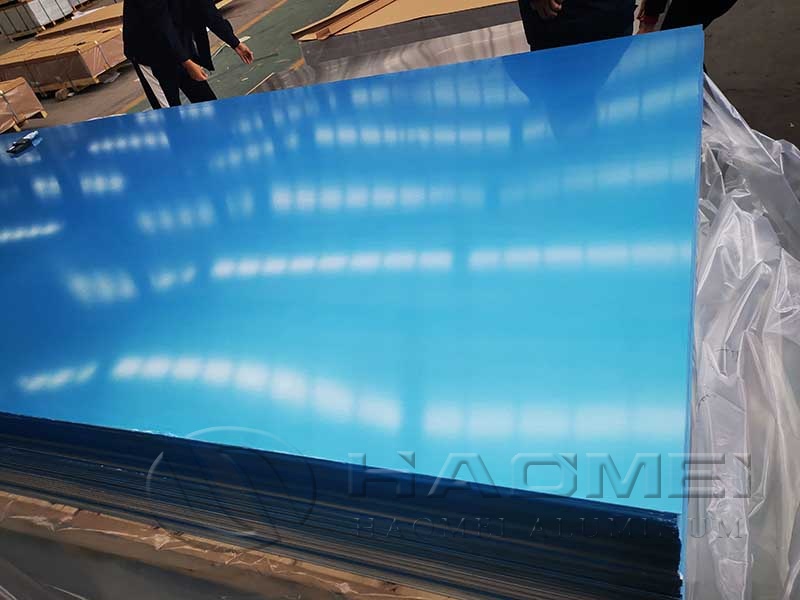
The 3xxx family is non-heat-treatable. Strength comes mainly from manganese solid-solution strengthening and cold work. It cannot be hardened by solution treatment like 2xxx, 6xxx, or 7xxx alloys, so temper control is central to performance.
Typical standards used in commercial orders include ASTM B209/B209M for aluminum and aluminum-alloy flat-rolled products, EN 573-3 for chemical composition, and EN 485 for mechanical properties, tolerances, and inspection requirements in Europe.
| Alloy | Main alloying idea | Typical use | Sourcing note |
|---|---|---|---|
| 3003 | Al-Mn, with small Cu addition | Cookware, tanks, ducting, general forming | Strong all-purpose choice for drawing and bending |
| 3004 | Al-Mn-Mg | Beverage can bodies, lamp caps, higher-strength formed parts | Higher strength than 3003, less forgiving in deep draw |
| 3104 | Al-Mn-Mg | Can stock and packaging components | Tight control of earing and texture is essential |
| 3105 | Al-Mn-Mg, lower Mn range than 3003 | Painted building panels, closures, signage | Good for pre-painted applications |
| 1050/1100 comparison | Commercially pure aluminum | Reflectors, chemical equipment | Better conductivity, lower strength |
| 5052 comparison | Al-Mg | Marine, transport, pressure components | Better strength and corrosion resistance, higher cost |
For 3003, manganese is commonly specified around 1.0-1.5 percent under Aluminum Association composition limits. 3004 and 3104 add magnesium for higher strength. Mechanical values must be checked against the ordered temper and thickness because ASTM and EN limits vary by gauge.
Common tempers:
| Temper | Practical meaning | Risk if wrong temper is ordered |
|---|---|---|
| O | Fully annealed, soft | May dent or deform during assembly |
| H12/H14 | Strain-hardened, partial hard | Cracking risk rises in severe forming |
| H24 | Strain-hardened and partially annealed | Good balance for many formed panels |
| H18 | Full hard | Poor deep-draw performance |
A reliable 3xxx rolling program starts before rolling. Melt chemistry, grain refinement, homogenization, rolling reduction, annealing curve, and tension leveling all affect finished formability.
A practical process flow is:
DC casting or continuous casting.
Homogenization to improve microstructure uniformity.
Scalping where surface integrity is critical.
Hot rolling to intermediate gauge.
Cold rolling to target thickness.
Intermediate or final annealing to reach temper.
Tension leveling, slitting, cutting, or circle blanking.
Surface inspection, oiling or PE film, packing.
For formed components, request trial samples from the same route as mass production. A lab coupon from another coil lot does not prove that the rolling texture, earing value, or lubrication will match production.
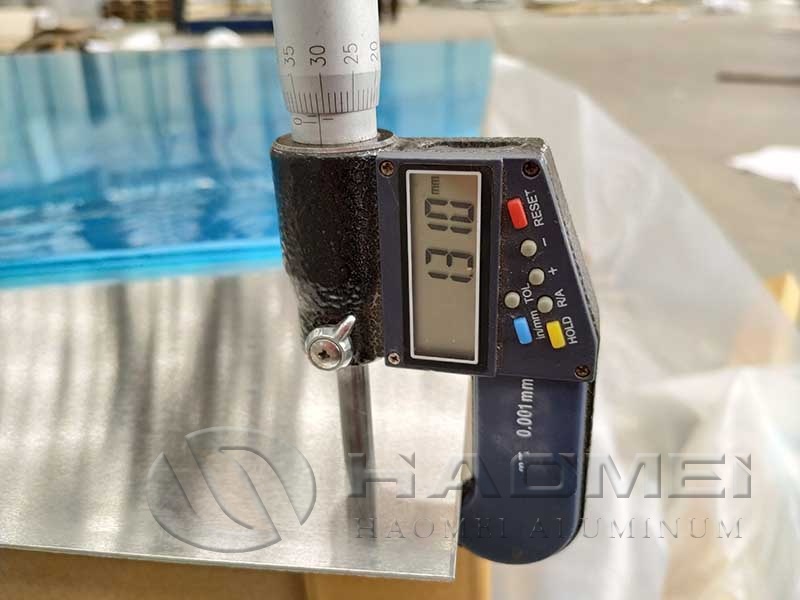
Use this inspection checklist before releasing a large order:
| Check item | What to specify | Why it matters |
|---|---|---|
| Alloy and temper | Example: 3003-H14 or 3004-H19 | Prevents strength and forming mismatch |
| Thickness tolerance | Refer to ASTM B209 or EN 485 | Controls yield, fit, and cost per part |
| Flatness | State maximum wave or I-unit requirement where needed | Reduces stamping and feeding problems |
| Surface | Mill finish, bright finish, coated, oiled, or film protected | Prevents cosmetic rejection |
| Edge condition | Mill edge, slit edge, deburred edge | Edge cracks often start from poor slitting |
| Coil data | ID, OD, weight range, winding direction | Ensures compatibility with decoilers |
| Traceability | Heat number, coil number, MTC | Required for audits and claims |
For heat-exchanger and appliance programs that need specific gauges, 1.2mm 1.5mm 1.6mm Dehumidifier 3003 4004 Aluminum Sheet is a relevant reference for formed thermal-management parts.
Al-Mn rolled products are used where stainless steel is over-specified and pure aluminum is too weak. Common applications include cookware, pressure-free tanks, trailer panels, chemical equipment, roofing, gutters, heat-exchanger fins, HVAC parts, battery cooling plates, air separation equipment, and disc circles for deep-drawn vessels.
For thin thermal components, clad combinations are common. A 3003 core may be paired with brazing alloys such as 4045 or 4343, while some air separation and heat-exchanger designs use 3003/4104-type structures. For such applications, 0.5mm 0.6mm 0.8mm Air Separation Material 3003 4104 Aluminum Sheet fits programs requiring controlled gauge and brazing performance.
Cost is normally built from three parts:
| Cost element | How it is determined | What to monitor |
|---|---|---|
| Aluminum base price | Usually linked to LME aluminum quotation or regional benchmark | LME cash/3-month price movement and hedging policy |
| Regional premium | Midwest, European duty-paid, Japan quarterly premium, or local market premium | Import flows, inventory, sanctions, duties, freight |
| Conversion charge | Rolling, annealing, slitting, coating, packing, margin | Gauge, width, temper, surface, MOQ, yield loss |
Manganese cost is usually less influential than primary aluminum, energy, freight, coating resin, and conversion capacity. Thin foil stock, narrow strip, and disc circles often carry higher conversion charges because yield loss and handling complexity rise.
Market cycles follow several demand streams. Beverage can stock is tied to packaging demand. HVAC and heat-pump programs are influenced by building cycles and energy-efficiency regulation. Construction panels follow real estate and infrastructure spending. In China, Europe, and North America, energy costs and carbon reporting increasingly influence mill competitiveness.
Sourcing teams should ask suppliers to separate metal price, premium, and fabrication charge in the quotation. This makes future price adjustment formulas easier to audit. For annual contracts, align the pricing basis with the company finance policy: monthly average LME, prior-month average, order-date quotation, or shipment-date quotation.
Packaging is not a small detail. Moisture staining, collapsed coils, and edge damage can erase any saving from a cheaper offer.
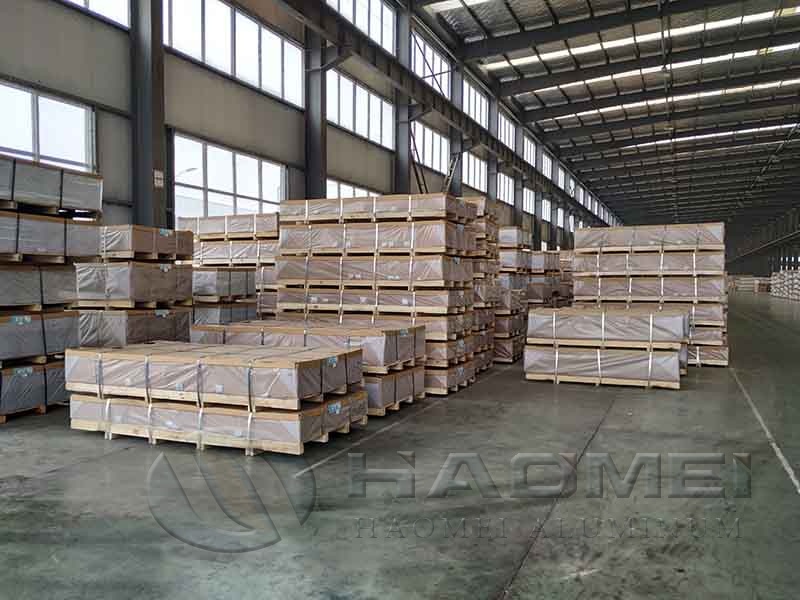
Before shipment, require:
| Requirement | Acceptable evidence |
|---|---|
| Mill test certificate | Chemistry, temper, mechanical properties, standard reference |
| Dimensional report | Thickness, width, length, diagonal where applicable |
| Surface inspection record | Oil stain, scratches, roll marks, pinholes for thin gauge |
| Packing photos | Coil eye, pallet, waterproof paper, desiccant, corner protection |
| Compliance statement | RoHS, REACH, food-contact rules, or customer-specific requirement where applicable |
For food-contact cookware or packaging, do not rely on alloy name alone. Verify the applicable local regulation, such as EU Framework Regulation EC 1935/2004 and relevant national metal-contact requirements, or FDA requirements for the intended use in the United States.
For a stable forming result, specify alloy, temper, gauge tolerance, surface state, edge quality, and test method in one purchase document. Then approve production only after trial forming, dimensional inspection, and packaging review are completed on material from the intended production route.
With the development of dozens of years, we, Haomei Aluminum has solid base to provide clean aluminum material for the high-end applications including lithium-ion battery, lightweight automobile body, 3c products, aluminum brazing and other special uses.