



Phone:
+86-15978414719
Publish Time: 2026-06-16 Origin:https://www.hmaluminumsupply.com
Aluminium Chequer Plate is selected for walkways, vehicle floors, loading platforms, stairs, tool boxes and wall protection where low weight, corrosion resistance and surface grip are required. The raised pattern is useful, but it should not be treated as an automatic safety guarantee.
The main concern for industrial purchasers is slip resistance. A wrong pattern, alloy or finish can reduce floor safety, increase maintenance cost and cause rejection during inspection.
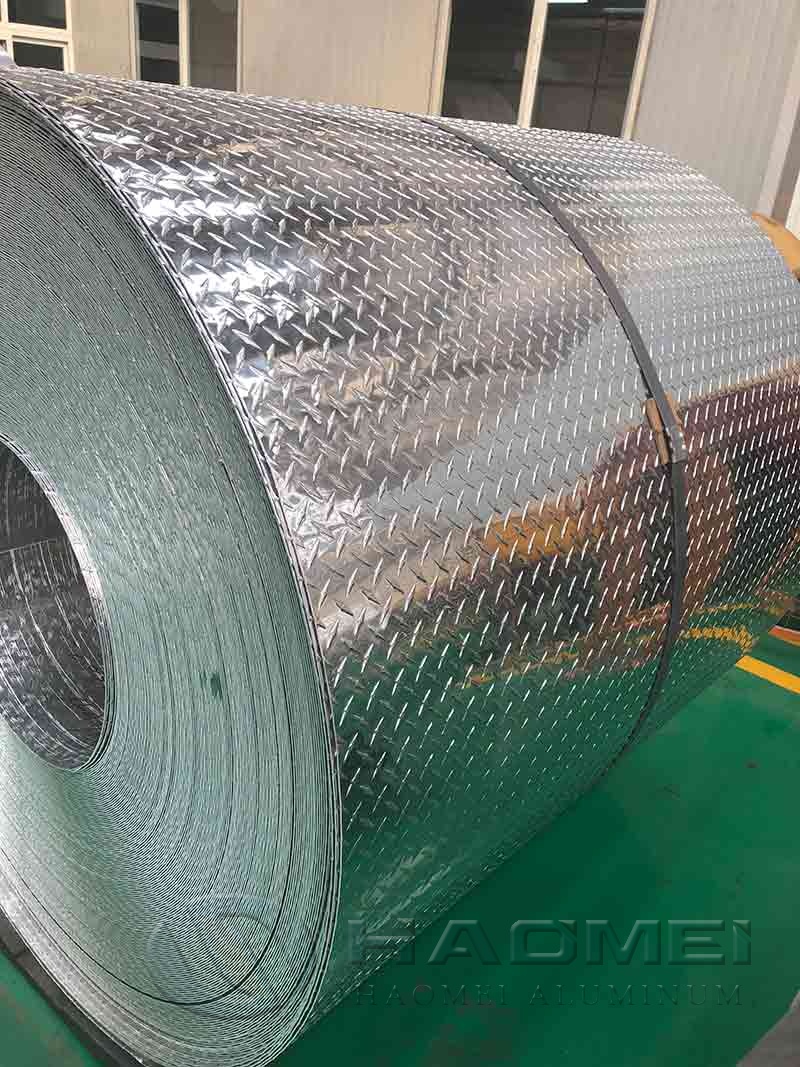
Raised diamonds, 5-bar, 2-bar and stucco-like tread patterns increase surface contact and drainage compared with a flat plate. Actual anti-slip performance still depends on water, oil, dust, footwear, slope, cleaning method and surface coating.
Do not specify only pattern appearance. Ask for a measurable slip test when the plate is used for access platforms, transport floors or wet areas.
| Application | Main risk | Practical specification action |
|---|---|---|
| Dry warehouse mezzanine | Dust and foot traffic | Define pattern type, base thickness and flatness tolerance. |
| Vehicle floor | Oil, mud, impact | Use stronger alloy and request slip test after surface finish. |
| Marine walkway | Salt water corrosion | Select 5052, 5083 or 5754 and check corrosion-related surface requirements. |
| Public stair tread | Legal safety exposure | Specify tested slip performance, edge treatment and installation method. |
Common test references include DIN 51130 ramp testing for shod feet and pendulum testing under BS 7976 or ASTM E303. These methods are not direct substitutes, so the purchase specification should name one method, test condition and acceptance value. EN 1386 and ASTM tread plate standards define product requirements, but they do not create one universal anti-slip rating for every workplace.
Use recognized standards to prevent disputes about chemistry, temper, thickness and surface quality. The table below shows practical references often used in international contracts.
| Requirement | Common reference | What to verify |
|---|---|---|
| Aluminium chemical composition | EN 573-3 or Aluminum Association alloy registration | Alloy identity such as 3003, 5052, 5754, 5083 or 6061. |
| Mechanical properties | EN 485-2, ASTM B209/B209M or ASTM B632/B632M | Tensile strength, yield strength, elongation and temper. |
| Tread plate specification | EN 1386 or ASTM B632/B632M | Patterned rolled plate requirements and inspection basis. |
| Dimensional tolerances | EN 485-3, EN 485-4 or agreed mill tolerance | Thickness, width, length, diagonal, flatness and burrs. |
| Test certificate | EN 10204 3.1 or equivalent mill certificate | Heat number, alloy, temper, dimensions and test results. |
For safety flooring, include base thickness and overall height separately. Base thickness controls load capacity, while overall height includes the raised pattern. Confusing these two values is a common cause of weight, cost and structural mismatch.
Aluminium has a density of about 2.70 g/cm3, roughly one-third that of carbon steel. This gives tread plate a weight advantage for vehicles, ship interiors and removable covers. Strength and corrosion resistance vary by alloy.
| Alloy and temper | Typical use | Strength and performance notes |
|---|---|---|
| 3003-H22/H24 | General flooring, wall panels, tool boxes | Good workability and economy; moderate strength. |
| 5052 aluminium plate H32/H34 | Marine panels, wet platforms, vehicle parts | Better corrosion resistance than 3003; widely used near salt water. |
| 5754 aluminium plate H114/H22 | Transport floors, ramps, walkways | Good strength, weldability and corrosion resistance. |
| 5083-H111/H116 | Heavy marine and offshore platforms | Higher strength and strong seawater resistance; higher cost. |
| 6061 aluminium plate T6 | Structural covers, machined parts | Higher strength, but lower formability than 5xxx alloys. |
Typical minimum values vary with thickness and governing standard. For example, 6061-T6 plate is commonly specified around 240 MPa minimum yield strength under ASTM and EN property tables, while 3003 tempers are selected for formability rather than high load performance. Always compare the mill certificate against the standard edition named in the order.
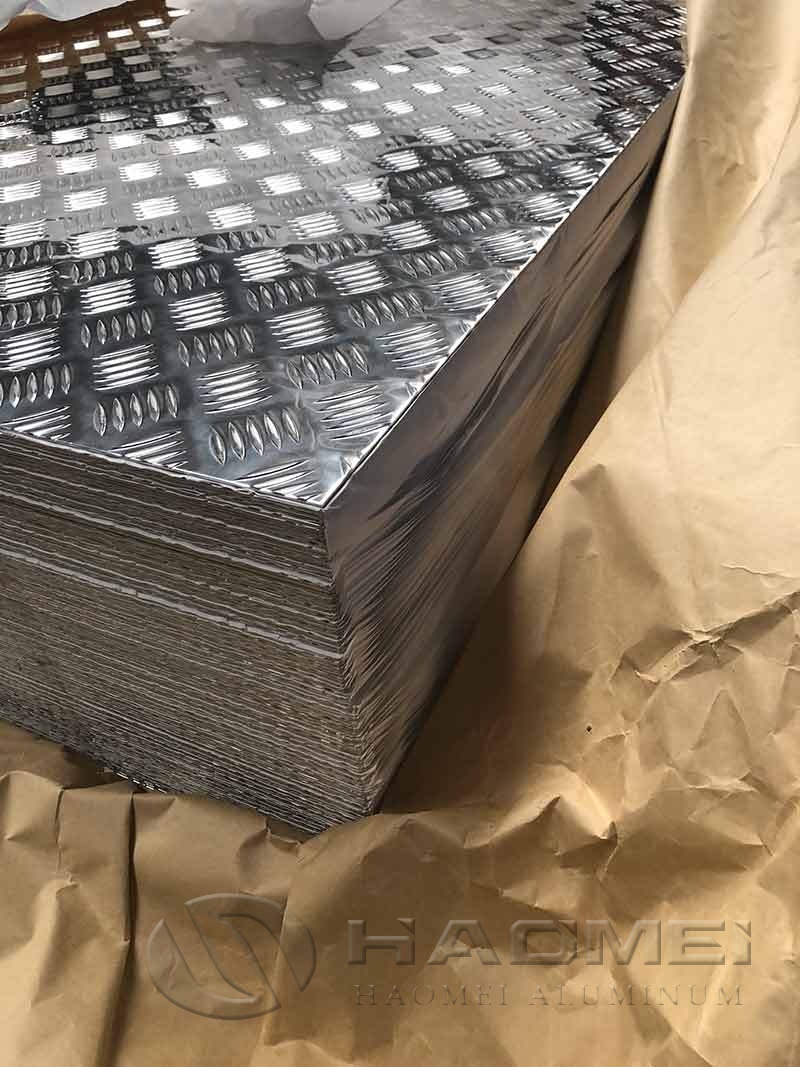
For floors, do not choose thickness by visual pattern alone. Start from load, support span and deflection limit. Then confirm whether the quoted thickness is base metal or overall tread height.
Approximate weight can be estimated as:
Weight kg/m2 = base thickness mm x 2.70 + pattern allowance
The pattern allowance depends on design and rolling practice. It is often verified by actual weighing rather than only by calculation. For repeat orders, record the theoretical weight basis in the contract to avoid invoice disputes.
| Base thickness | Common use | Caution |
|---|---|---|
| 1.5-2.0 mm | Decorative panels, light covers | Not suitable for concentrated wheel loads without support. |
| 2.5-3.0 mm | Light walkways, tool boxes | Check span and fixing method. |
| 4.0-6.0 mm | Industrial floors, ramps, vehicle decking | Confirm load rating and flatness. |
| 8.0 mm and above | Heavy-duty covers and platforms | Check welding plan, handling weight and surface distortion. |
A clear inspection plan reduces claims and production delays. Use this checklist before approving mass supply:
Confirm alloy and temper on the mill test certificate.
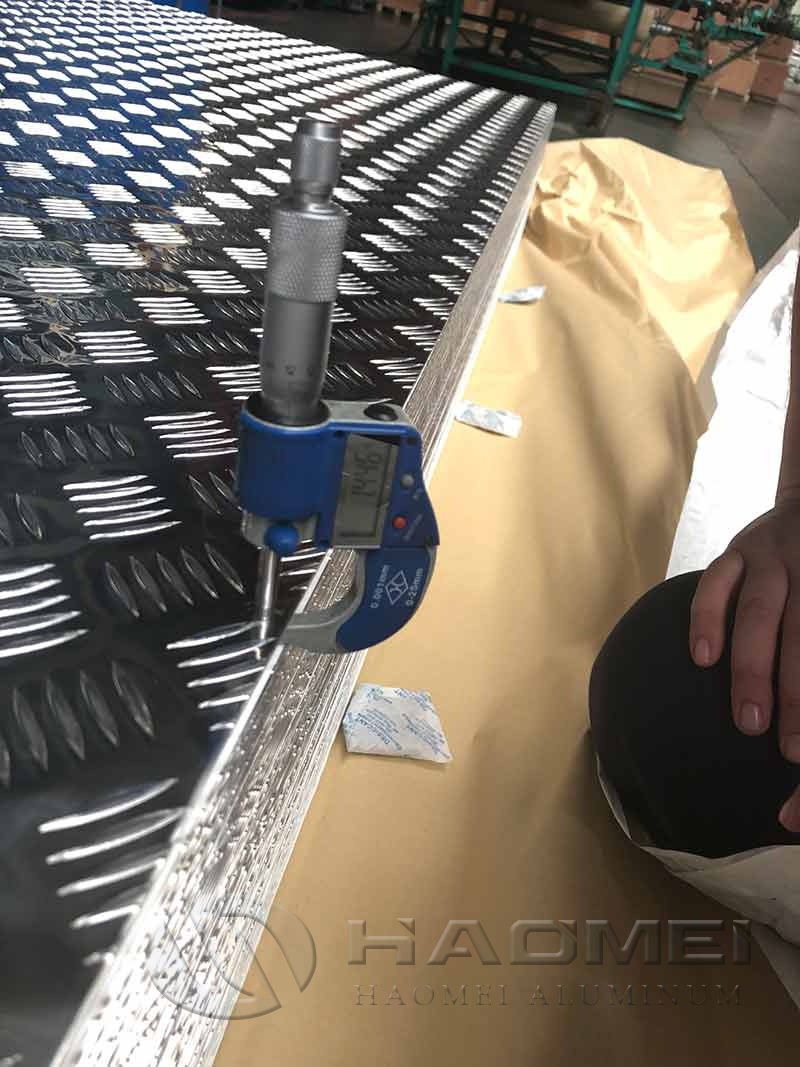
Measure base thickness away from the raised pattern.
Check width, length, diagonal difference and flatness against the agreed tolerance.
Inspect pattern uniformity, scratches, stains, roll marks and edge burrs.
Verify tensile testing under ASTM E8/E8M or EN ISO 6892-1 when mechanical certification is required.
For anodized surfaces, refer to ISO 7599 where applicable.
For coated products, define coating type, film thickness, adhesion and color tolerance.
For wet or oily floors, request slip test results on the finished surface, not only bare mill finish.
Packaging should protect the raised surface from friction marks. Export packs normally use moisture barrier, interleaving, wooden pallets or cases, edge protection and steel or PET strapping. Ask for photos before shipment when the surface will remain visible after installation.
The price of aluminium tread plate is not only the metal value. It normally combines a transparent aluminium index, regional premium, conversion charge, pattern rolling cost, finishing, packaging and freight.
| Cost item | Impact on price | How to control it |
|---|---|---|
| LME aluminium reference | High | Use a clear pricing date or average period. |
| Alloy | Medium to high | 5xxx and 6xxx alloys usually cost more than 3003. |
| Thickness and width | High | Standard sizes reduce trimming and rolling loss. |
| Surface finish | Medium | Mill finish is lower cost than anodized or coated surfaces. |
| Pattern type | Medium | Common 5-bar or diamond patterns are usually easier to source. |
| Packing and freight | Medium | Match packing strength to transport distance and unloading method. |
Avoid choosing the lowest offer without checking standard, tolerance and certificate scope. A small saving can disappear if the plate is too thin at the base, has inconsistent pattern height or fails the required slip test.
Prepare the order description in this sequence:
Product: Aluminium Chequer Plate.
Alloy and temper: for example, 5754-H114 or 5052-H32.
Pattern: 5-bar, diamond or agreed drawing.
Base thickness and allowable tolerance.
Width, length and quantity by piece count or total weight.
Standard: EN 1386, ASTM B632/B632M or agreed equivalent.
Surface: mill finish, anodized, coated or protective film.
Slip test method and acceptance value if used for walking surfaces.
Certificate: EN 10204 3.1 or equivalent.
Packing, marking and delivery term.
This specification method keeps the focus on the top concern: verified slip resistance with the right alloy, thickness and documented inspection.
With the development of dozens of years, we, Haomei Aluminum has solid base to provide clean aluminum material for the high-end applications including lithium-ion battery, lightweight automobile body, 3c products, aluminum brazing and other special uses.