



Phone:
+86-15978414719
Publish Time: 2026-01-09 Origin:https://www.hmaluminumsupply.com
In today's trend towards lightweight manufacturing, aluminum alloys, with their advantages of light weight, corrosion resistance, and good thermal conductivity, are widely used in many fields such as automotive, aerospace, and electronics. To achieve reliable connections between aluminum alloy components, aluminum alloy brazing materials have become one of the key materials.
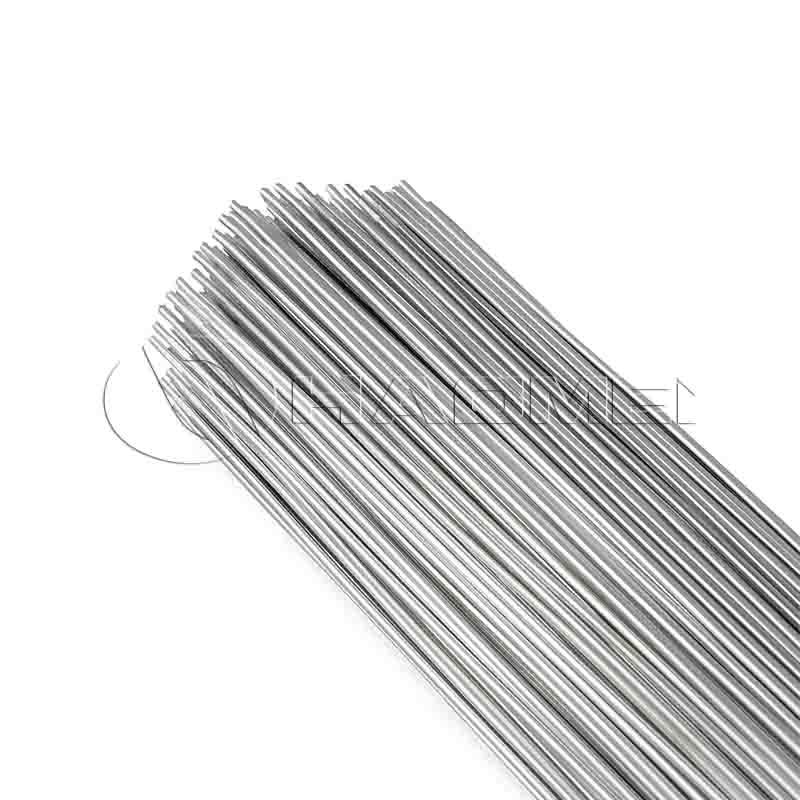
Aluminum brazing materials are filler materials used to fill gaps in aluminum alloy workpieces during the brazing process. They melt after being heated to a specific temperature, fill the brazing gap, and undergo a metallurgical reaction with the aluminum alloy base material. After cooling and solidification, a strong brazed joint is formed, thus achieving the connection of the workpieces.
A crucial prerequisite is that the melting point of the brazing material must be lower than that of the aluminum alloy base material being joined. This is necessary to complete the connection without damaging the base material, which is one of the core differences between brazing and fusion welding.
Based on melting temperature, brazing materials can be divided into two main categories: hard brazing materials and soft brazing materials. Hard brazing filler metals have a melting temperature above 450℃, resulting in high-strength brazed joints and are the mainstream choice in industrial applications. Common aluminum-silicon and aluminum-magnesium brazing filler metals belong to this category.
Soft brazing filler metals have a melting temperature below 450℃ and are mainly used in applications where high connection strength is not required, such as lightweight connections for some electronic components, but their application in core industrial components is less common.
Chemically, the most mainstream type is aluminum-silicon (Al-Si) brazing filler metal, which is also the industry standard material for aluminum alloy brazing. Adding silicon to aluminum significantly lowers the melting point, typically between 580-620℃, just below the melting point of most commonly used aluminum alloy base materials. This ensures a strong bond while preventing the base material from melting and deforming.
Besides these, there are also aluminum-magnesium and aluminum-silicon-magnesium brazing filler metals. For example, aluminum-magnesium brazing filler metals have stronger corrosion resistance, making them suitable for special working conditions such as marine environments and new energy vehicles; aluminum-silicon-magnesium brazing filler metals combine fluidity and corrosion resistance, making them suitable for vacuum brazing applications.
From a usage perspective, brazing materials are diverse, adaptable to various production processes: common types include welding wire/rods, suitable for manual flame brazing or repair of small components; solder paste is a mixture of powdered brazing filler metal and flux, allowing for precise application and suitable for precision electronic components or complex structures.
Clad brazing plates have a layer of brazing filler metal metallurgically bonded to the surface of the core alloy, widely used in mass production scenarios such as automotive radiators; additionally, there are powder and preform forms to meet customized needs for different working conditions.
First is chemical composition stability; the content of the core alloying elements directly determines performance. For example, 4047 aluminum-silicon brazing filler metal contains approximately 12% silicon, has excellent fluidity, and is a common choice for joining 6061 aluminum alloys; 5356 filler rod metal contains 4.5-5.5% magnesium, has a tensile strength of up to 290 MPa, and outstanding corrosion resistance.
Secondly, there are process performance factors, including melting range, fluidity, and wettability. For example, aluminum-silicon brazing fillers have a narrow melting range and good fluidity, allowing them to fully fill gaps through capillary action. Wetting ability, however, depends on the flux – aluminum alloy surfaces easily form a high-temperature resistant alumina layer (melting point approximately 2072℃), and flux can dissolve this oxide layer and prevent its reformation, making it a key component for ensuring brazing quality.
Finally, there are performance characteristics, such as corrosion resistance, high-temperature stability, and mechanical strength, which need to be matched to the application scenario. For example, marine engineering requires highly corrosion-resistant aluminum-magnesium brazing fillers, while aerospace components require a balance of high-temperature stability and high strength.
When choosing aluminum alloy brazing materials, first, match the base metal composition. For example, when welding cast aluminum or 6xxx series aluminum alloys, aluminum-silicon brazing fillers are preferred.
For high-temperature and corrosive environments, aluminum-magnesium brazing fillers are preferred. For mass production, coated brazing plates can be used, while for precision components, solder paste can be chosen.
At the same time, it is important to control the welding temperature to avoid overheating and deformation of the base material. After welding, flux residue must be thoroughly removed to prevent corrosion.
With the development of dozens of years, we, Haomei Aluminum has solid base to provide clean aluminum material for the high-end applications including lithium-ion battery, lightweight automobile body, 3c products, aluminum brazing and other special uses.