



Phone:
+86-15978414719
Publish Time: 2026-04-08 Origin:https://www.hmaluminumsupply.com
For lithium-ion cells, aluminum foil is not packaging material. It is the cathode current collector, and its surface quality directly affects coating adhesion, internal resistance, and process yield. For industrial users sourcing battery materials, the top concern is usually coating consistency. If foil thickness, pinholes, wettability, or tensile properties drift, the coating line becomes unstable and scrap rises fast.
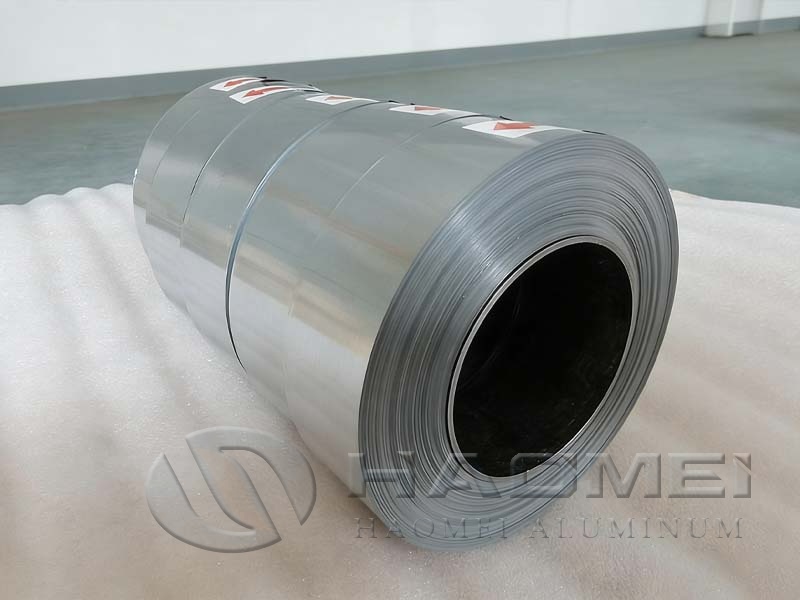
In most lithium-ion batteries, copper foil is commonly used on the anode side, while aluminum foil is used on the cathode side because of its conductivity, light weight, corrosion behavior in the cathode potential range, and cost-effectiveness.
Typical battery-grade foil is supplied in very thin gauges, often around 10-20 μm depending on cell design and chemistry. Common alloys include 1060, 1070, 1100, and 1235. Selection depends on conductivity targets, elongation, forming behavior, and coating process stability.
For teams evaluating Ev battery foil, the practical questions are simple:
Shortlist suppliers using a technical checklist first, not price first.
Battery foil is often ordered in narrow thickness windows. Even small deviation affects coat weight and energy density. Ask for:
A clean and uniform surface helps slurry wetting and adhesion. Require data or test reports for:
Foil must survive slitting, coating, drying, and winding. Review:
Low resistivity supports efficient current collection. Suppliers should be able to provide conductivity-related data or alloy compliance.
Pinholes, inclusions, and edge waves can cause line stoppages or reduced cell reliability. Request:
The table below summarizes widely used options in the market. Exact suitability depends on cell design and processing parameters.
| Alloy | Typical use | Strengths | Main checks |
|---|---|---|---|
| 1060 | Cathode current collector | High purity, good conductivity, stable processing | Thickness tolerance, surface cleanliness |
| 1070 | High-conductivity applications | Very high aluminum purity, good electrical performance | Cost, elongation, pinhole control |
| 1100 | General battery foil use | Balanced formability and corrosion resistance | Coating adhesion, slit edge quality |
| 1235 | Thin foil applications | Good workability at thin gauge | Uniformity at low thickness |
If your line is sensitive to conductivity and thin-gauge stability, compare data sheets for 1070 Battery Grade Aluminum Foil against other high-purity grades before locking the specification.
Procurement teams increasingly ask for documentation aligned with recognized management and testing systems. While battery foil specifications are often customer-specific, these checkpoints are broadly verifiable:
For battery manufacturing environments, additional controls may include cleanliness management, statistical process control, and traceability systems. If the foil will be exported into regulated supply chains, ask whether the producer can support documentation for automotive or energy storage qualification processes.
From a market perspective, global battery demand remains strongly linked to electric vehicles and energy storage. The International Energy Agency has repeatedly reported sustained growth in EV sales, which continues to support demand for battery raw materials and components, including current collector foil. This is one reason lead times and conversion premiums can move quickly even when primary aluminum prices are relatively stable.
Battery foil pricing usually combines the aluminum base price and the conversion premium. The premium changes based on process difficulty and quality requirements.
| Cost factor | Effect on price | Why it matters |
|---|---|---|
| Alloy purity | Medium to high | Higher purity grades can cost more to produce |
| Gauge | High | Thinner foil needs tighter rolling control and lower defect rates |
| Width and slit tolerances | Medium | Narrow tolerance increases processing cost |
| Surface cleanliness | High | Battery-grade cleaning and inspection add value |
| Order size and delivery schedule | Medium | Production planning and coil setup affect cost |
| Testing and documentation | Low to medium | Extra reporting adds administrative and lab cost |
Because LME aluminum and regional premiums move regularly, any price reference should be date-stamped. For contract discussions, ask suppliers to separate:
Use this checklist before approving a supplier:
The strongest differentiator is still process stability, not headline purity alone. A foil that looks competitive on paper but delivers uneven coating adhesion or poor winding performance will raise total cost through scrap, downtime, and customer claims.
For battery applications, the best sourcing outcome usually comes from aligning alloy, gauge, surface condition, and inspection method with the actual cell process. When suppliers can provide traceable data on thickness consistency, cleanliness, and defect control, procurement risk drops and production yield becomes easier to protect.
With the development of dozens of years, we, Haomei Aluminum has solid base to provide clean aluminum material for the high-end applications including lithium-ion battery, lightweight automobile body, 3c products, aluminum brazing and other special uses.